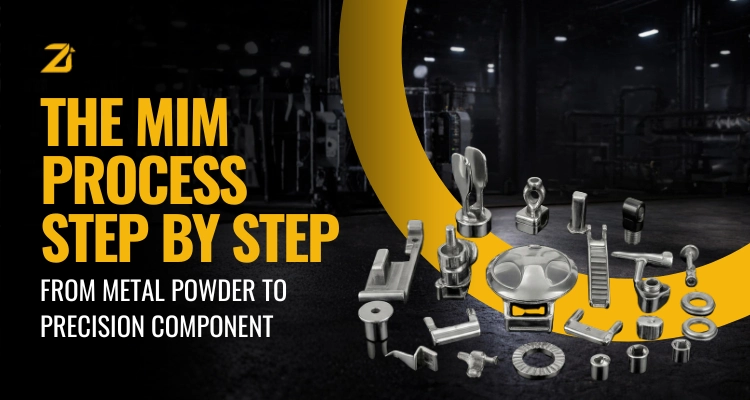
The MIM Process Step by Step: From Metal Powder to Precision Component
 Digvijaysingh Rao
on
Digvijaysingh Rao
on
Introduction
How do you manufacture a metal component that is too complex for traditional machining, too intricate for die casting, and requires the high-strength properties of wrought steel? For many engineers and procurement heads, this is the ultimate production puzzle. Selecting the wrong manufacturing route doesn't just result in a sub-par part; it leads to excessive material waste, long lead times, and an inability to scale.
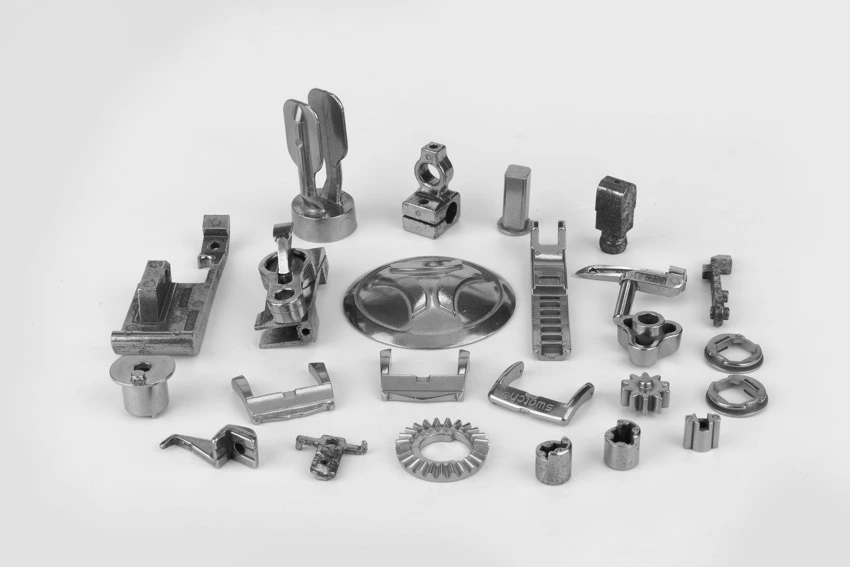
Metal Injection Molding (MIM) is the definitive answer to this challenge. It is a "bridge" technology that combines the design freedom of plastic injection molding with the durability of fully dense metal components. By merging powder metallurgy with injection molding techniques, MIM enables the manufacturing of complex geometries with exceptional strength and consistency.
At Zealot Inc., we have specialized in this precision process since 2013. Operating from our manufacturing campus in Gujarat, India, we have developed over 70 unique products and served 30+ global customers across 10+ industries. This guide provides a technically authoritative walkthrough of the MIM process, explaining how we transform raw metal powder into high-performance industrial components.
Key Takeaways
- Design Freedom: MIM handles complex geometries, such as undercuts and thin walls, that are impossible for other metalworking methods.
- Material Efficiency: As a "near-net-shape" process, MIM reduces material waste by up to 90% compared to traditional machining.
- High Density: Final components achieve 98%-100% of theoretical density, offering mechanical properties nearly identical to wrought alloys.
- Scalability: The process is ideal for producing micro-to-small components at high volumes with extreme repeatability.
- The Transition States: Success in MIM depends on managing the "Green" and "Brown" part states before the final sintering.
3 Processes Indian Manufacturers Compare Most
In the precision manufacturing landscape of India particularly within the industrial corridors of Gujarat OEMs often weigh three primary methods for metal component production:
- CNC Machining: Excellent for low-volume prototypes and high precision, but prohibitively expensive and wasteful for complex, high-volume parts.
- Investment Casting: Good for larger parts with moderate complexity but lacks the ability to produce the micro-details and thin walls that MIM excels at.
- Metal Injection Molding (MIM): The preferred choice for complex, small-to-medium parts (usually under 100 grams) where high volume and structural integrity are paramount.
MIM vs. CNC vs. Die Casting - Performance Comparison
While these processes often compete, their outcomes vary significantly based on part weight, complexity, and volume.
Material Performance Table Feature Metal Injection Molding (MIM) CNC Machining Die Casting
| Feature | Metal Injection Molding (MIM) | CNC Machining | Die Casting |
|---|---|---|---|
| Geometric Complexity | Extreme (Highest) | Moderate | Moderate |
| Production Volume | High to Very High | Low to Moderate | High |
| Material Utilization | High (Near-net-shape) | Low (Subtractive) | High |
| Mechanical Strength | Superior (Fully Dense) | Excellent | Moderate (Porosity issues) |
| Surface Finish | Excellent (Ra 0.8–1.6) | Varies by tool | Good |
| Initial Tooling Cost | High | Low | High |
| Total Cost of Ownership | Very Low (at scale) | High | Moderate |
The Metal Injection Molding (MIM) Process Step by Step
Step 1: Metal Powder Selection and Validation
The foundation of a precision component is the metal powder itself. Unlike traditional powder metallurgy which uses coarse grains, MIM requires extremely fine, spherical powders typically ranging from 1 to 20 microns.
At Zealot Inc., we utilize a wide variety of materials to meet specific engineering requirements:
- Stainless Steel: (e.g., 316L, 17-4 PH) for corrosion resistance and medical applications.
- Low Alloy Steel: For high-strength industrial components.
- Tool Steels: For wear-resistant parts.
- Specialty Alloys: Including Tungsten and Titanium alloys for aerospace and defense.
The spherical shape of these particles is critical because it ensures a high packing density, which directly influences the final part's shrinkage and density.
Step 2: Mixing and Feedstock Compounding
Once the metal powder is selected, it must be turned into a moldable material. This is achieved by mixing the metal powder with a thermoplastic binder system—a blend of polymers and waxes.
- The Mix: The powder and binder are mixed in a high-shear environment at elevated temperatures.
- Homogeneity: The goal is to create a perfectly uniform "feedstock" where every metal particle is coated in binder.
- Pelletization: The cooled mixture is granulated into small pellets, ready to be fed into the injection molding machine.
If the feedstock is inconsistent, the final part will suffer from uneven shrinkage, leading to dimensional failure. This is why Zealot Inc. maintains an in-house quality control laboratory to validate every batch of feedstock.
Step 3: Injection Molding the "Green Part"
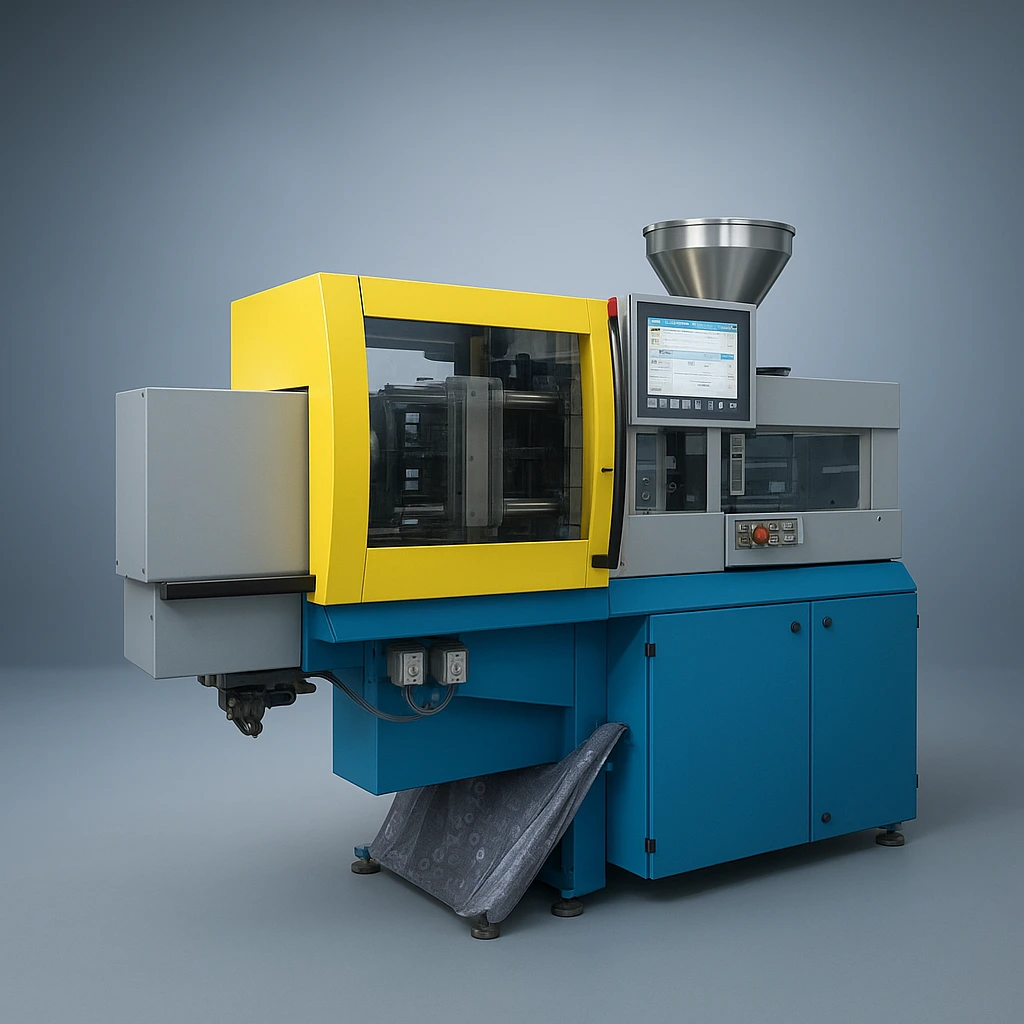
The feedstock pellets are heated until molten and injected into a precision-engineered mold cavity. This stage utilizes the same machinery as plastic injection molding, allowing for extreme geometric freedom.
- The Green Part: The result of this stage is the "Green Part." It has the exact geometry of the final component but is roughly 20% larger to account for the shrinkage that will occur during sintering.
- Complex Features: This is where we incorporate features like internal threads, cross-holes, and intricate surface textures.
- Consistency: Because we utilize CNC and VMC machines to manufacture our molds, we ensure that every Green Part is a perfect replica of the digital design.
Step 4: Debinding – Creating the "Brown Part"
The binder that allowed the metal powder to be molded must now be removed. This is a critical transition where the part goes from "Green" to "Brown."
- The Process: Debinding removes the majority of the binder through solvent, catalytic, or thermal methods.
- The Brown Part: Once the binder is extracted, the part is referred to as a "Brown Part." It is held together by a small amount of "backbone" binder and is extremely fragile.
- Pore Network: Debinding creates a network of interconnected pores throughout the part, which allows for the final removal of any remaining binder during the initial stages of sintering.
Step 5: Sintering and High-Temperature Densification
Sintering is the most transformative phase of the MIM journey. The Brown Parts are placed into a high-temperature, controlled-atmosphere furnace.
- Diffusion: As the temperature rises (approaching the melting point of the metal), the metal particles begin to bond through diffusion.
- Shrinkage: The pores created during debinding collapse, and the part shrinks to its final, designed dimensions.
- Densification: The part reaches 96% to 99% theoretical density, resulting in a solid, high-performance metal component.
The furnace atmosphere—whether hydrogen, nitrogen, or vacuum—is strictly controlled to prevent oxidation and ensure the final part's chemical purity.
Step 6: Finished Good and Secondary Operations
While many MIM parts are "net-shape" (ready to use right after sintering), some require secondary refinement to meet extreme tolerance or aesthetic requirements.
- Secondary Processes: We offer heat treatment, surface finishing, CNC finishing, threading, and specialized coatings.
- Customization: From micro-components to small parts, we provide tailored finishing solutions to meet industry-specific benchmarks.
Why MIM Wins in High-Wear and Precision Applications
In a comparison of MIM vs. CNC, MIM consistently wins on cost and complexity at scale. Where a CNC machine might take an hour to mill a complex part from a block of steel (wasting 70% of the material), our MIM process can produce hundreds of those parts per hour with near-zero waste.
Zealot’s MIM components are engineered for accuracy and durability. By achieving high density, our parts offer superior abrasion resistance and impact strength, making them the definitive winner for automotive fuel systems, surgical grippers, and industrial transmission gears.
Total Cost of Ownership - The Strategic Advantage
Indian procurement teams often make the mistake of looking at "Tooling Cost" rather than the Total Cost of Ownership (TCO). While the initial mold for a MIM part is an investment, the per-part savings are massive.
Consider this scenario:
- CNC Machined Component: No tooling cost, but high per-part labor and material waste. Cost remains flat even at high volumes.
- Zealot Inc. MIM Component: Initial tooling investment (e.g., ₹2,00,000). Low per-part cost due to automation and material efficiency.
By the time you reach 5,000 units, the MIM solution has typically paid for its tooling and is significantly more profitable for the plant. Furthermore, the reduction in assembly steps (by molding complex features directly) reduces the risk of field failures and maintenance downtime.
Zealot's Take - Realities in Indian Manufacturing
Since 1996, the Zealot Group has observed a significant shift in Indian plants toward advanced automation. Many factories continue to use expensive machining because "that's what we've always used." However, our engineering team has seen that 80% of precision component failures in high-vibration environments can be traced back to the internal stresses or porosity found in cast or machined parts.
We help our clients implement Design for MIM (DfM). We don't just take a drawing and mold it; we partner with your technical teams to optimize the part for the MIM process. This collaborative technical development—one of our six phases of turnkey execution—ensures that we eliminate "product bounce" or rejection rates in QC labs before mass production even begins.
Conclusion
There is no universally "best" manufacturing process - only the best process for your specific part complexity and volume.
- Choose MIM when you need complex geometries, high-volume scalability, and superior material properties for small, high-wear components.
- Choose CNC for low-volume prototyping or very large, simple components.
- Choose Die Casting for high-volume parts where structural strength is less critical than cost.
At Zealot Inc., we aren't just a parts supplier; we are an engineering partner. With over 30 years of experience and 100+ machines delivered globally, our expertise ensures that you get the right material and the right process for the job.
Frequently Asked Questions (FAQs)
Read More:
- What is Polyurethane Dispensing and How Does It Work
- What is Metal Injection Molding (MIM)? Complete Beginner’s Guide
- What is Cast Nylon (MC Nylon)? Complete Guide for Manufacturers
- What is Polyurethane Dispensing and How Does It Work
- How the Polyurethane Casting Process Works: Step-by-Step for Manufacturers

Digvijaysingh Rao
Head of Sales & Strategy
Digvijaysingh Rao leads sales and business development at Zealot Inc. He works closely with customers to understand their production challenges and recommend solutions that are practical and easy to maintain.