How the Polyurethane Casting Process Works: Step-by-Step for Manufacturers
 Digvijaysingh Rao
on
Digvijaysingh Rao
on
Introduction
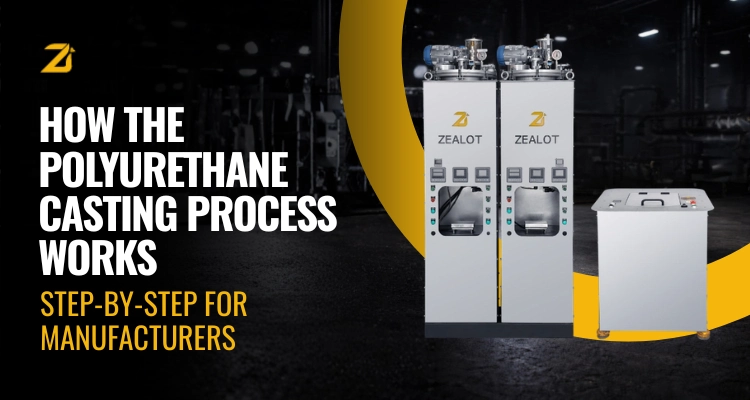
For industrial manufacturers producing high-durability components, mastering the polyurethane casting process is a critical operational advantage. This precise chemical operation reacts a prepolymer with a curative to form a high-performance elastomer, requiring absolute environmental and stoichiometric control that manual methods simply cannot provide.
Zealot Inc. leverages over 30 years of engineering expertise to design precision dispensing systems that eliminate human error. By removing operator guesswork, manufacturers guarantee batch consistency for components ranging from heavy-duty rollers to automotive seals.
Key Takeaways
- Precision is Non-Negotiable: A successful chemical reaction relies entirely on exact temperature control and precise stoichiometric ratios.
- Automation Drives Profitability: Transitioning from hand-batch stations to fully automated systems reduce material waste and lowers your total cost of ownership.
- Degassing Prevents Failure: Proper vacuum degassing during prepolymer preparation is the only definitive way to eliminate moisture and micro-bubbles.
- Dynamic Mixing Wins: High-viscosity elastomers require specialized dynamic mixing heads to ensure a homogenous and defect-free chemical reaction.
- Turnkey Solutions Scale Operations: Partnering with industry experts for a complete plant setup ensures global standard compliance from day one.
The Strategic Shift Toward Automation
The industrial manufacturing landscape is currently undergoing a massive transformation driven by strict quality requirements and the urgent need for maximum material efficiency. Historically, polyurethane components were frequently cast using manual hand-batch stations equipped with simple vortex mixers, which introduces severe vulnerabilities when scaling up operations. Modern corporate buyers expect entirely transparent and highly data-driven manufacturing processes from their polymer suppliers.
The integration of advanced automation serves as the primary bridge between local manufacturing capabilities and international market dominance. Modern automated machinery features programmable logic controllers that accurately monitor every single process variable in real-time, removing the reliance on individual operator skill and transferring the burden of precision directly onto the machine.
Upgrading to closed-loop manufacturing systems allows facilities to prove their absolute reliability to international buyers and stringent automotive OEMs. It is a highly strategic investment in securing long-term corporate contracts and establishing regional authority within the global polyurethane sector.
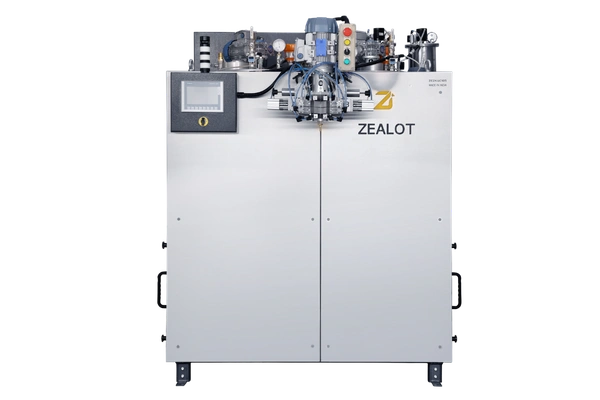
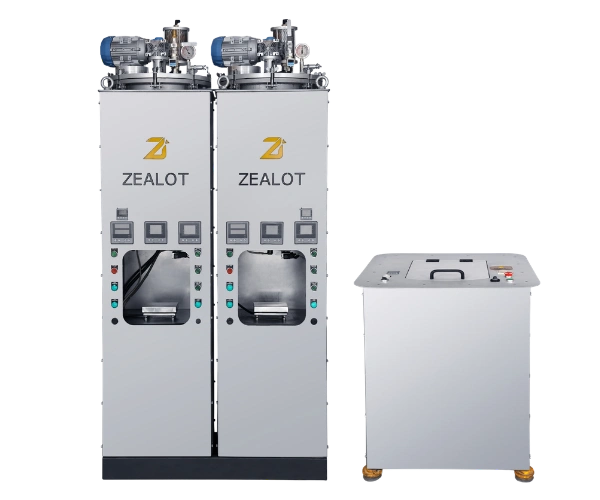
Overview - What Happens in a Cast PU Process?
The cycle transforms raw chemical liquids into cured, high-impact solids. Because slight variations in temperature or pressure can compromise a batch, the PU casting steps India manufacturers follow must be engineered perfectly to prevent scrap. Understanding these phases is the first step toward upgrading to reliable industrial machinery.
Step 1: Raw Material Preparation
Manufacturers heat prepolymers and curatives to exact temperatures to lower viscosity before continuous vacuum degassing in agitated tanks removes all trapped air and moisture.
Step 2: Metering and Ratio Accuracy
The chemical reaction relies on exact stoichiometric ratios maintained by precision gear pumps, which eliminate the defects and waste caused by inaccurate manual weighing.
Step 3: Mixing - Static vs Dynamic
Perfectly metered components enter a chamber where a high-speed impeller shears them together, creating a homogenous blend before the polyurethane’s brief pot life expires.
Step 4: Dispensing Techniques
Mixed liquid is rapidly transferred into pre-heated molds via an elastomer casting machine to ensure perfect cavity filling and prevent air voids associated with manual pouring.
Step 5: Curing and Demolding
Heated molds facilitate the exothermic reaction until the part achieves green strength for demolding, followed by a secondary post-cure thermal cycle to maximize durability.
Total Cost of Ownership and ROI Analysis
Investing in sophisticated automated machinery requires a highly detailed analysis of the total cost of ownership over the equipment's operational lifespan. Manual casting facilities inherently suffer from hidden operational costs that severely degrade overall business profitability, as spilled chemicals, excessive material flashing, and expired pot-life waste constantly consume expensive raw materials without generating any revenue.
Automated systems actively minimize these hidden expenses on the factory floor immediately upon their correct installation and commissioning. By dispensing the exact required weight into every mold with zero overflow, manufacturers experience immediate reductions in raw material overhead, ensuring that expensive chemicals are converted directly into sellable goods.
Furthermore, the significantly increased throughput speed drives a rapid and highly visible return on the initial capital equipment investment. Faster, continuous production cycles allow your business to seamlessly accept larger volume orders and expand into entirely new, highly lucrative commercial markets without bottlenecking existing operations.
Manual vs Automated Casting - Where It Goes Wrong
Relying on manual processes for large-scale commercial production is a massive liability in today's highly competitive export market. Human error at the weighing station, inconsistent vortex mixing times, and uncalibrated pouring speeds always result in unacceptable scrap rates that drain facility resources.
An automated machine functions as the central nervous system of a modern casting plant, guaranteeing repeatable engineering excellence. It ensures that every single production variable is locked firmly into place, preventing costly operator mistakes and maximizing overall factory floor utilization.
| Metric | Manual Hand-Batch Casting | Automated PU Casting (MMD Systems) | Industrial Impact |
|---|---|---|---|
| Ratio Accuracy | Variable based on operator skill | Exact PLC controlled precision | Eliminates expensive chemical waste entirely. |
| Throughput/Speed | Low due to manual labor limits | High volume continuous dispensing | Drastically increases ROI and factory output. |
| Material Waste | High from spills and flashing | Near-zero exact shot weight | Lowers raw material overhead costs significantly. |
| Quality Consistency | Variable between batches | Identical and repeatable results | Meets stringent automotive export standards. |
| Energy Efficiency | Low with open-air heat loss | High via closed-loop oil heating | Reduces operating costs and improves sustainability. |
Common Defects and How Machines Eliminate Them
Manufacturing defects consistently erode profit margins and severely damage vital vendor reputations in the highly competitive industrial sector. Inadequate raw material degassing causes catastrophic subsurface bubbles and structural pinholes, while off-ratio chemical metering leads directly to soft, sticky spots or highly brittle edges that easily shatter under physical stress.
Automated machines permanently eliminate these costly physical failures and ensure identical production runs every single day by removing operator guesswork entirely. They achieve this flawless consistency through the use of continuous vacuum day tanks, variable ratio precision gear pumps, and closed-loop oil heating systems that maintain absolute process stability regardless of external environmental changes.
Without intelligent automation, operators are left to manually adjust parameters that actually require microscopic precision. Replacing human guesswork with absolute digital precision is the only definitive way to achieve zero-defect manufacturing and global standard compliance.
Manual vs Automated Casting - Where It Goes Wrong
Relying on manual processes for large-scale commercial production is a massive liability in today's highly competitive export market. Human error at the weighing station, inconsistent vortex mixing times, and uncalibrated pouring speeds always result in unacceptable scrap rates that drain facility resources.
An automated machine functions as the central nervous system of a modern casting plant, guaranteeing repeatable engineering excellence. It ensures that every single production variable is locked firmly into place, preventing costly operator mistakes and maximizing overall factory floor utilization.
| Metric | Manual Hand-Batch Casting | Automated PU Casting (MMD Systems) | Industrial Impact |
|---|---|---|---|
| Ratio Accuracy | Variable based on operator skill | Exact PLC controlled precision | Eliminates expensive chemical waste entirely. |
| Throughput/Speed | Low due to manual labor limits | High volume continuous dispensing | Drastically increases ROI and factory output. |
| Material Waste | High from spills and flashing | Near-zero exact shot weight | Lowers raw material overhead costs significantly. |
| Quality Consistency | Variable between batches | Identical and repeatable results | Meets stringent automotive export standards. |
| Energy Efficiency | Low with open-air heat loss | High via closed-loop oil heating | Reduces operating costs and improves sustainability. |
Global Standard Compliance and Industry 4.0
To truly compete internationally, adhering to global standard compliance is absolutely mandatory for any rapidly growing manufacturing facility aiming for export dominance. International safety and quality benchmarks dictate exactly how manufacturing plants must operate to be considered reliable vendors for massive multinational corporations.
Industry 4.0 principles are rapidly becoming the absolute norm in polymer processing and advanced chemical handling worldwide. Modern elastomer equipment provides actionable production data regarding exact shot weights, material temperatures, and fluid pump pressures, ensuring any slight deviation is flagged immediately before expensive scrap is produced.
Partnering with an experienced turnkey provider guarantees that your facility is built strictly to these exacting global standards from the very beginning. This comprehensive end-to-end approach drastically reduces your total time-to-market for new component designs and guarantees seamless production scaling.
Conclusion
Executing a flawless polyurethane casting process demands rigid operational control, from the initial vacuum degassing to the final automated precision pour. For modern manufacturers, replacing outdated manual methods with advanced automation is the only definitive way to eliminate costly scrap and scale production profitably.
Zealot Inc. engineers complete turnkey plant solutions and custom-built machinery uniquely designed to optimize every phase of your polyurethane production. Consult our engineering experts today to transform your manufacturing facility and permanently secure your competitive advantage in the global market.
Frequently Asked Questions (FAQs)
Read More:

Digvijaysingh Rao
Head of Sales & Strategy
Digvijaysingh Rao leads sales and business development at Zealot Inc. He works closely with customers to understand their production challenges and recommend solutions that are practical and easy to maintain.