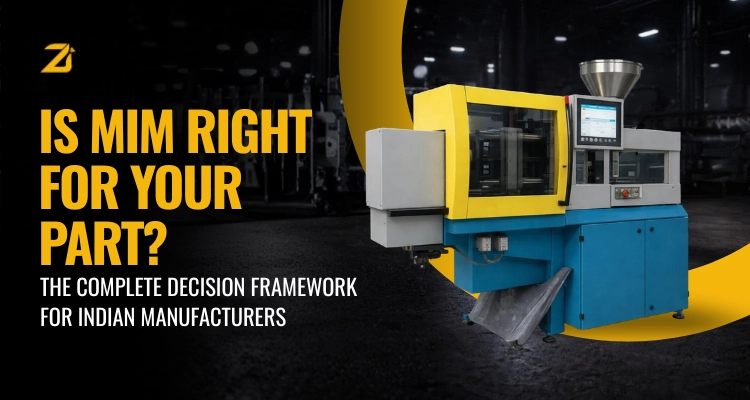
Is MIM Right for Your Part? The Complete Decision Framework for Indian Manufacturers
 Digvijaysingh Rao
on
Digvijaysingh Rao
on
Introduction
"Is MIM right for my part in India?" This is the single most critical question we hear from procurement managers and engineers evaluating high-precision manufacturing. Choosing the correct production method dictates your margins, scalability, and part quality. While traditional machining has been the historical default, Metal Injection Molding (MIM) is aggressively shifting the paradigm for complex, high-volume production.
This guide provides a systematic decision framework to evaluate the exact cost, complexity, and scale required to make MIM your most profitable manufacturing choice. At Zealot Inc., through our specialized MIM division, we engineer high-precision metal components for aerospace, medical, and automotive leaders worldwide. By understanding these technical parameters, industrial leaders can confidently transition to workflows that maximize long-term ROI.
Key Takeaways
- Metal Injection Molding becomes highly cost-effective for production runs exceeding 10,000 to 15,000 units annually.
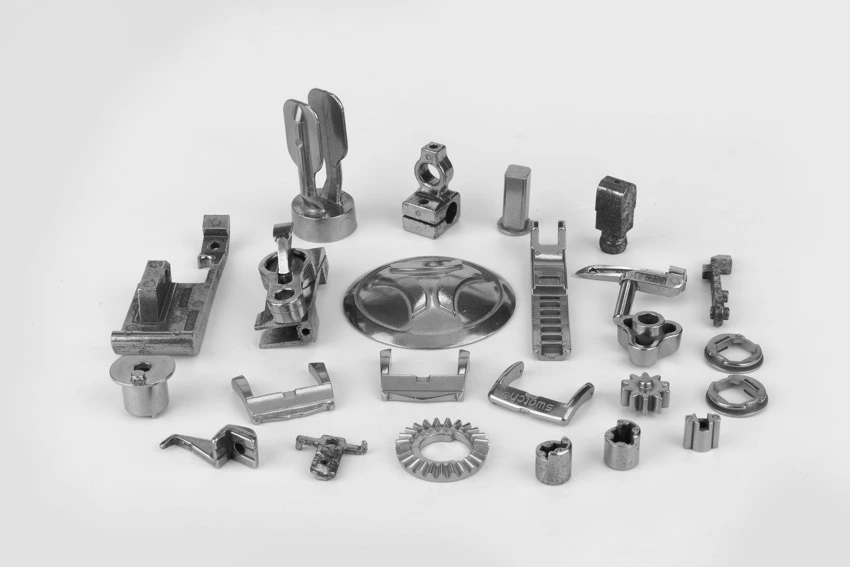
- MIM is ideal for intricate geometries with thin walls and internal channels, achieving tight tolerances without secondary machining.
- The process eliminates machine-induced internal stress, preventing long-term part deformation.
- Near-net-shape production produces virtually zero material scrap, making it highly economical for expensive alloys like titanium.
- Zealot Inc. provides a complete feasibility review to help Indian manufacturers seamlessly adopt advanced precision miniaturization.
Overview - Is MIM Right for Your Part in India?
India's manufacturing sector is rapidly scaling to meet global export demands. In this landscape, cost pressure and the intense demand for miniaturization are forcing engineers to rigorously evaluate their production lines. When determining "is MIM right for my part in India," it is critical to distinguish between formative and subtractive manufacturing.
CNC machining removes material from a solid metal block. It is highly precise but inherently generates waste and requires significant machine time per unit. Conversely, Metal Injection Molding (MIM) is a formative process combining the design freedom of plastic injection molding with the high strength of forged metals. For local manufacturers aiming to boost their export competitiveness in 2026 and beyond, adopting MIM offers a clear pathway to scalable, high-quality production that traditional methods simply cannot match at mass volumes.
Process Comparison - A Step-by-Step Workflow
Understanding the fundamental workflow clarifies why scalability varies so drastically. CNC machining operates sequentially, requiring multiple setups and prolonged cycle times. MIM, however, operates on a highly automated batch-processing model engineered for massive throughput.
The advanced MIM process steps include:
1. Mixing: The process begins by blending microscopically fine metal powders such as stainless steel or titanium alloys with a proprietary thermoplastic binder. This binder acts as a critical carrier vehicle, ensuring the metal flows uniformly during injection. The exact ratio is meticulously controlled to guarantee the structural integrity of the final component.
2. Feedstock Creation: Once the metal powder and binder are completely homogenized, the mixture is cooled and granulated into uniform moldable pellets known as feedstock. This material behaves similarly to standard plastics, allowing it to be seamlessly fed into automated injection machines. Consistent feedstock quality is essential for maintaining strict tolerances across massive production runs.
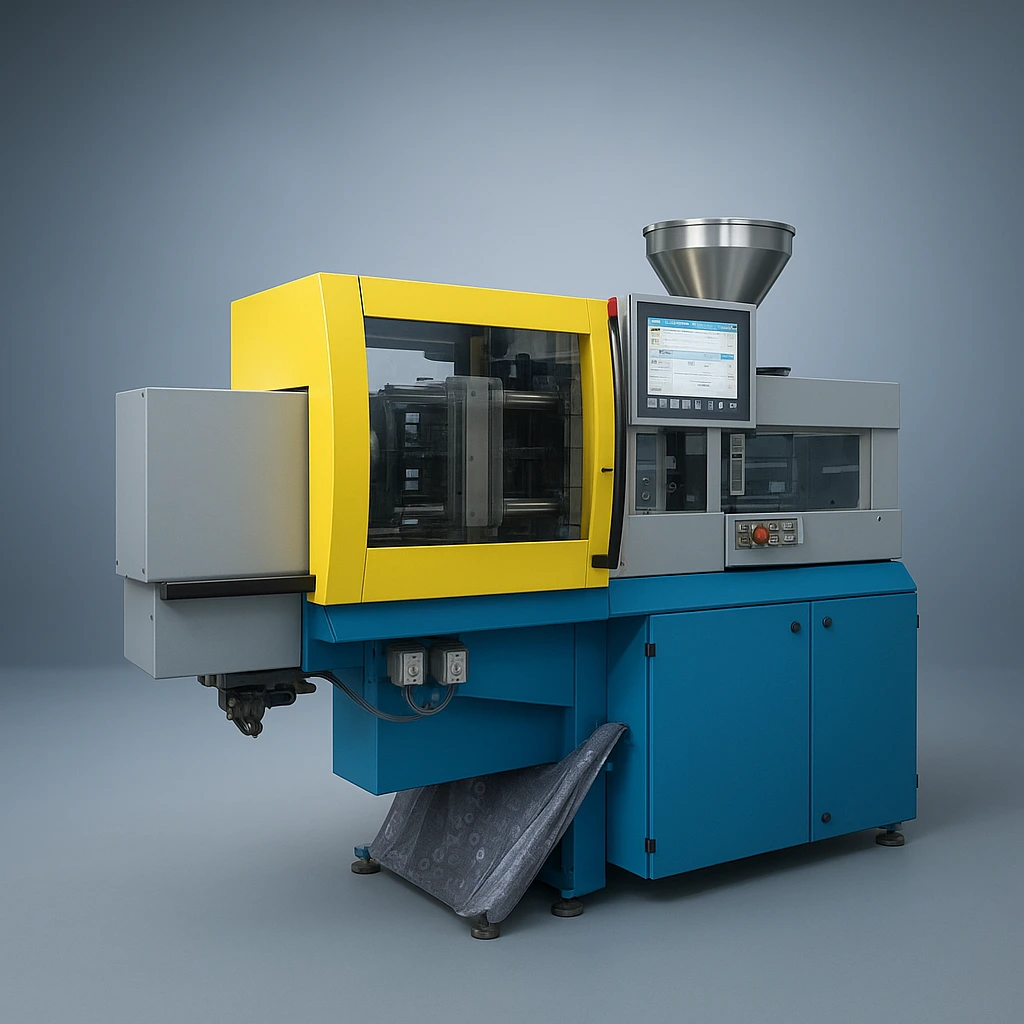
3. Injection Molding: The feedstock is heated and injected under immense pressure into a custom-engineered steel mold, instantly forming highly complex geometries. The resulting component, called a "green part," is dimensionally oversized to account for future shrinkage. It relies entirely on the polymer binder to hold its intricate shape intact before the final fusing phase.
4. Debinding: Before the metal particles can be fused together, the temporary plastic binder must be carefully extracted without collapsing the part structure. Through a highly controlled chemical or thermal process, the binder is safely dissolved, leaving behind a highly porous "brown part." This intermediate component is extremely fragile and must be handled with precision.
5. Sintering & Finished Good: The porous brown parts are placed in an atmosphere-controlled furnace and heated to temperatures just below the metal's melting point. The metal particles fuse together, causing the component to shrink uniformly into a fully dense, high-strength solid. The finished good achieves exceptional mechanical properties and requires little to no secondary machining.
Cost Breakdown - Tooling vs Per-Part Economics
The financial viability of your part centers on the intersection of upfront tooling and amortized unit costs. CNC machining has low initial tooling costs, making it accessible for prototypes, but it maintains a high, static cost-per-part due to continuous machine time and scrap.
MIM requires a significant upfront investment in a hardened steel mold (NRE cost). However, once operational, the cycle times are measured in seconds, and the per-part cost plummets rapidly. Because it utilizes nearly 100% of the raw material, the marginal cost of mass production is incredibly low. Mastering this break-even analysis is the key to maximizing ROI.
To truly understand the financial impact, exploring the break-even point is crucial. Use the interactive tool below to adjust your expected production volume and part complexity to see how the per-part economics shift between CNC Machining and Metal Injection Molding.
Comparison Table
| Parameter | CNC Machining | Metal Injection Molding (MIM) | Industrial Impact |
|---|---|---|---|
| Best Volume Range | 1 to 10,000 units per month | 15,000+ units per day | MIM drives massive cost reductions for high-volume commercial scale. |
| Tooling Cost | Very Low | Higher than CNC (Custom Molds) | CNC is better for small production; MIM requires upfront capital for long-term ROI. |
| Per-Part Cost | High and Static | Very Low at Volume | MIM achieves superior economies of scale. |
| Material Waste | High (Subtractive) | Minimal (Additive/Molding) | MIM protects margins when using high-value alloys. |
| Design Complexity | Increases Cost Significantly | Does Not Impact Cost | MIM allows for freeform design without financial penalty. |
Volume - When Machining Stops Making Sense
For functional prototypes or runs under 5,000 parts, CNC is preferred. However, scaling CNC is a capital-intensive endeavor requiring more machines, floor space, and operators to double output.
MIM was engineered strictly for scale. A single, well-maintained MIM mold can continuously cycle, producing millions of identical parts with unmatched repeatability. When transitioning from 10,000 to 500,000 units, MIM provides production elasticity without severe logistical bottlenecks.
Accuracy, Finish & Material Considerations
MIM supports a vast array of high-performance materials. At Zealot Inc., our portfolio includes stainless steels, low alloy steels, tool steels, tungsten alloys, and titanium alloys.
The surface finish straight out of the sintering furnace is excellent, often eliminating the need for expensive secondary polishing. Additionally, MIM can reliably hold tight dimensional tolerances of +/- 0.1% or better on standard dimensions, ensuring a perfect fit for complex assemblies.
When to Use MIM, Not Other Methods
Figuring out when to use metal injection molding India requires aligning engineering parameters with business goals. Transition to MIM when:
- Annual volumes exceed 15,000 units: Tooling costs are fully amortized.
- The part weighs less than 100 grams: MIM is optimized for micro to small components.
- The geometry is highly complex: 5-axis machining or multiple setups are driving up costs.
- Scrap is hurting margins: You are wasting expensive alloys through subtractive chips.
- Consolidating multiple parts: You want to design and mold previously welded sub-components into a single unified piece.
Common Decision Mistakes Indian Manufacturers Make
- Overusing Traditional Methods: Sticking with CNC for 50,000+ unit runs simply because "it's how we've always done it."
- Ignoring Tooling ROI: Disqualifying MIM solely due to the initial mold cost, while ignoring massive per-unit savings over the product lifecycle.
- Designing for Machining: Designing parts based on subtractive limitations rather than utilizing the design freedom MIM provides.
- Underestimating Volume Potential: Not anticipating that future global export demand might require rapid scaling.
Conclusion
Returning to the core question: is MIM right for my part in India? If you are scaling production, dealing with highly complex component geometries, and demanding tight tolerances without the massive waste of subtractive machining, the answer is definitively yes.
By leveraging MIM, B2B manufacturers can eliminate material waste, consolidate assemblies, and drastically reduce per-part costs. Through specialized MIM division of Zealot Inc., we bring over 25 years of engineering experience and a 70+ product development portfolio to your production line. We partner with ambitious companies to ensure they remain highly competitive in the global market.
Frequently Asked Questions (FAQs)
Read More:
- What is Polyurethane Dispensing and How Does It Work
- What is Metal Injection Molding (MIM)? Complete Beginner’s Guide
- What is Cast Nylon (MC Nylon)? Complete Guide for Manufacturers
- Understanding Metering, Mixing, and Dispensing Systems for PU
- MIM vs CNC Machining: When Metal Injection Molding Wins on Cost, Complexity & Volume

Digvijaysingh Rao
Head of Sales & Strategy
Digvijaysingh Rao leads sales and business development at Zealot Inc. He works closely with customers to understand their production challenges and recommend solutions that are practical and easy to maintain.