
Electrical MIM Expertise
Electrical and Electronics Metal Injection Molding in India
Zealot Inc. manufactures precision Metal Injection Molding components for the electrical and electronics industry from its facility in Gujarat, India. Our MIM parts serve electronics OEMs, sensor manufacturers, power electronics firms, and electrical equipment producers across domestic and export markets.
Electrical and electronics manufacturing demands components with tight dimensional tolerances, complex internal features, and high-volume consistency. Metal Injection Molding meets these requirements precisely, enabling production of intricate parts that conventional machining and casting cannot deliver at comparable scale.
With 25+ years of engineering experience and 70+ MIM products developed across 10+ industries, Zealot brings proven MIM capability to electronics component manufacturing. We support requirements from prototype development through high-volume serial production, backed by in-house quality control.
What Is Metal Injection Molding (MIM) and Why Electrical and Electronics Industry Uses MIM Parts

Why Electrical and Electronics Industry Engineers Specify MIM
Enabling Electrical Innovation
Applications of MIM Parts for Electrical and Electronics Industry

Connector Housings

EMI and RF Shielding Components

Sensor Housings

PCB Mounting Hardware

Switch and Relay Components

Micro Electromechanical Assemblies

Precision Terminals and Electrical Contacts

Mobile Phones, Laptops, and Technical Appliances
Specifications & Capabilities
Electrical and Electronics MIM Engineering Specifications and Capabilities
| Parameter | Capability |
|---|---|
| Standard Tolerance | ± 0.3% of nominal dimension |
| Precision Machining Tolerance | ± 0.1% or better (post-sinter CNC machining) |
| Part Weight Range | 0.1g to 100g |
| Production Volumes | Prototype quantities to high-volume serial production |
| Surface Finish | As-sintered Ra 1.6 to 3.2 microns; improved through secondary finishing |
| Secondary Operations | CNC machining, heat treatment, electroplating, passivation, surface coating |
| Tooling Support | In-house tooling design and qualification |
| Project Support | DFM review, prototype development, first article inspection, production validation |
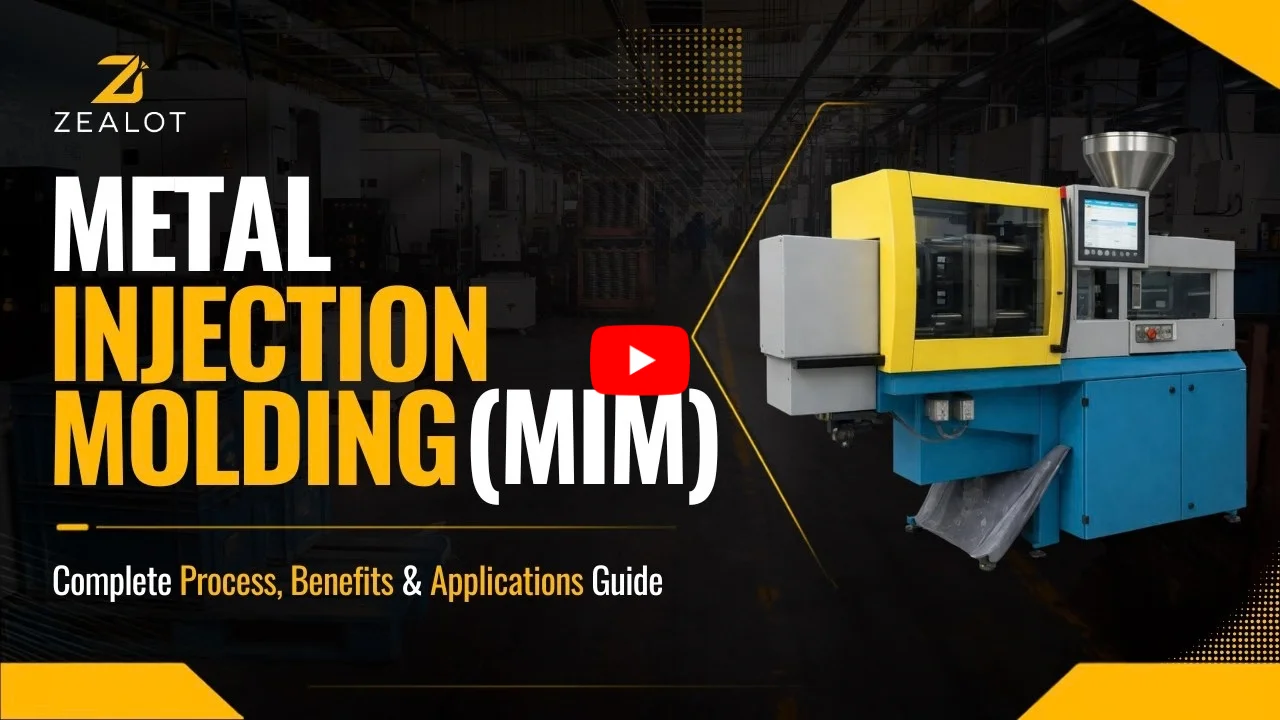
How Metal Injection Molding Works
- Step 1 - Feedstock Preparation
Fine metal powder (2-15 microns) blended with a thermoplastic binder to create flowable feedstock. Composition is tightly controlled for consistent packing density.
- Step 2 - Injection Molding
Feedstock injected under pressure into precision steel tooling. Fills complex features — thin walls, internal channels, threads that machining cannot reach. Output: green part.
- Step 3 - Debinding
Binder removed through solvent, thermal, or catalytic debinding in a controlled environment. Output: porous brown part that retains shape and is ready for sintering.
- Step 4 - Sintering
Brown part sintered at 1,200°C to 1,400°C in a controlled atmosphere. Metal particles fuse, porosity collapses, part densifies to greater than 97% of theoretical density. Shrinkage of 15-20% is pre-compensated in tooling design.
- Step 5 - Secondary Operations
CNC machining, heat treatment, surface finishing, plating, and dimensional inspection applied where application requirements demand coordinated as part of the complete supply package.
Materials Used in Electrical and Electronics MIM Parts

316L Stainless Steel

17-4 PH Stainless Steel

Low-Alloy Steel

304L Stainless Steel

Titanium Alloy

Tungsten Alloy
Precision for Electronic Components
Key Features of Electrical and Electronics MIM Components

Tight Tolerances

Complex Geometries

High Material Density

Electrical Conductivity Control

Miniature Component Capability

Consistent Repeatability
MIM Advantages
Advantages of MIM Parts for Electrical and Electronics Industry

Single-Piece Part Complexity

High-Volume Production Economics

Material Selection Driven by Performance

Near-Net-Shape Production

Dimensional Consistency Across Production Runs

Surface Quality for Assembly Readiness

Tooling Investment Recovery Over Volume

Secondary Operation Compatibility
Get Started
Ready to Discuss Your Electrical MIM Component Requirements?
Why Choose Zealot Inc.
Precision MIM Solutions for Electrical and Electronics Applications

In-House MIM Tooling Design and Qualification

In-House Dimensional and Surface Inspection
Prototype-to-Production Program Management

Secondary Operations Available On-Site

Multi-Alloy Material Processing Capability

DFM Review and Engineering Collaboration
Quality & Certifications
Electrical and Electronics Quality Standards and Certifications
Dimensional Inspection

Material Certification

Sintering Density Verification

Surface Quality Inspection

Process Documentation