
Introduction
In the pursuit of operational efficiency and material longevity, industrial decision-makers are increasingly pivoting from traditional metals to high-performance polymers. Cast Nylon, specifically Monomer Cast (MC) Nylon or Cast Polyamide PA6, represents the pinnacle of this shift. Unlike standard injection-molded plastics, MC Nylon is produced through a pressureless chemical reaction known as anionic polymerization, resulting in a material with significantly higher molecular weight and superior mechanical integrity.
For manufacturers looking to reduce machine downtime and energy consumption, MC Nylon offers a unique combination of high tensile strength, excellent self-lubrication, and extreme wear resistance. As a leading provider of precision-engineered systems, Zealot Inc. recognizes that the transition to MC Nylon is not merely a material choice but is a strategic engineering decision that impacts the entire lifecycle of industrial components. With over 30 years of industry experience, we ensure that our fully automated dispensing systems deliver the consistency and durability required for international standard compliance.
What is Cast Nylon (MC Nylon)? The Definitive Engineering Guide for Manufacturers
In the world of advanced material science, Monomer Cast (MC) Nylon stands as a superior alternative to both extruded plastics and non-ferrous metals. While traditional nylon is processed under high pressure, MC Nylon is "grown" through a pressureless casting process. This allows for the production of massive, near-net-shape components—ranging from heavy-duty gears to high-load bearings—that are virtually free of internal stress.
Technically, MC Nylon is defined by its molecular weight, which often exceeds 100,000 nearly five times that of standard injection-molded nylon. This molecular density translates to a tensile strength of 70–100 MPa and a friction coefficient as low as 0.1, enabling it to replace aluminum, brass, and steel in demanding industrial environments. By utilizing state-of-the-art Nylon Dispensing Machines from Zealot Inc., manufacturers can now achieve the precision and quality control necessary to produce these high-performance components at scale.
What is Cast Nylon (MC Nylon)? The Definitive Engineering Guide for Manufacturers
In the world of advanced material science, Monomer Cast (MC) Nylon stands as a superior alternative to both extruded plastics and non-ferrous metals. While traditional nylon is processed under high pressure, MC Nylon is "grown" through a pressureless casting process. This allows for the production of massive, near-net-shape components—ranging from heavy-duty gears to high-load bearings—that are virtually free of internal stress.
Technically, MC Nylon is defined by its molecular weight, which often exceeds 100,000 nearly five times that of standard injection-molded nylon. This molecular density translates to a tensile strength of 70–100 MPa and a friction coefficient as low as 0.1, enabling it to replace aluminum, brass, and steel in demanding industrial environments. By utilizing state-of-the-art Nylon Dispensing Machines from Zealot Inc., manufacturers can now achieve the precision and quality control necessary to produce these high-performance components at scale.
Key Takeaways
- Superior Molecular Structure: MC Nylon possesses a molecular weight of over 100,000, compared to 20,000–30,000 in injection-molded nylon, providing enhanced structural stability.
- Metal Replacement: With tensile strengths reaching 70-100 MPa, MC Nylon effectively replaces aluminum, brass, and even steel in high-load applications like gears and bearings.
- Self-Lubricating Properties: A low friction coefficient (0.1-0.3) reduces the need for external lubricants, lowering maintenance costs and preventing contamination.
- Thermal Resilience: It maintains dimensional stability at operating temperatures ranging from -40°C to 115°C, with heat deflection peaks up to 200°C.
- Manufacturing Efficiency: Large-scale components can be cast with minimal internal stress, a feat nearly impossible with traditional extrusion or injection methods.
The Science of Cast Nylon: Anionic Polymerization
To understand why MC Nylon outperforms other polyamides, one must look at the chemistry. While standard Nylon 6 is melted and forced into a mold, Cast Nylon is grown.
Anionic Polymerization of Caprolactam
The process begins with caprolactam, a monomer. Through the introduction of catalysts and activators in a temperature-controlled environment, a chemical reaction occurs within the mold itself. This "pressureless" casting allows the polymer chains to grow longer and more organized than they would in high-pressure molding.
The result is a highly crystalline structure. Higher crystallinity equates to:
- Increased hardness and stiffness.
- Better chemical resistance.
- Higher melting points.
Technical Performance: MC Nylon vs. Extruded Nylon & Metals
Manufacturers often ask: Why shouldn't I just use standard PA6 or stick with Aluminum? The answer lies in the performance-to-weight ratio.
Mechanical Strength
MC Nylon approaches the tensile strength of aluminum but at a fraction of the weight. This reduction in mass decreases the inertia in moving machinery, leading to lower energy consumption for drive systems.
Wear and Abrasion Resistance
In mining and heavy industrial sectors, abrasion is the primary cause of component failure. MC Nylon's wear resistance is approximately 10 times higher than that of standard PA6 and significantly higher than many bronze alloys.
Dimensional Stability
Water absorption is a common drawback of polyamides. However, MC Nylon exhibits a lower absorption rate (0.5%-1.5%) compared to standard nylon, ensuring that precision gears and bushings maintain their tolerances even in humid environments.
Strategic Comparison Table: Material Performance Metrics
| Feature | MC Nylon (Cast PA6) | Extruded Nylon 6 | Aluminum (6061) | Industrial Impact |
|---|---|---|---|---|
| Molecular Weight | 100,000+ | 20,000 – 30,000 | N/A | Higher durability & longevity |
| Tensile Strength | 70 – 100 MPa | 50 – 70 MPa | 310 MPa | Replacement for high-load parts |
| Friction Coeff. | 0.1 – 0.3 | 0.3 – 0.5 | 1.0 – 1.3 | Reduced wear, less lubrication |
| Density (g/cm³) | 1.15 | 1.14 | 2.70 | Lower inertia, easier handling |
| Max Temp (Continuous) | 115°C | 80°C | 200°C+ | High-temp industrial use |
Industrial Applications: Where MC Nylon Excels
The versatility of MC Nylon makes it an essential material across diverse high-stakes industries.
Heavy Machinery & Mining
In the mining sector, components are subjected to extreme grit and load. MC Nylon is used for:
- Conveyor Rollers: Reducing belt wear and noise.
- Large-Scale Gears: Replacing heavy steel gears to reduce vibration.
- Slide Plates: Utilizing self-lubrication to prevent "stick-slip" motion.
Automotive & Transportation
Automotive OEMs utilize MC Nylon for high-performance pulleys, thrust washers, and bushings. Its ability to withstand under-hood temperatures while providing silent operation makes it superior to metal alternatives.
Food & Pharmaceutical Processing
Because MC Nylon can be manufactured with FDA-compliant additives and requires no external grease, it is ideal for cleanroom environments and food processing lines where contamination is a risk.
ROI Implications: The Business Case for MC Nylon
From a CXO perspective, the transition to MC Nylon components is a play for Total Cost of Ownership (TCO) reduction.
- Lower Maintenance Labor: Self-lubricating parts mean fewer man-hours spent on manual greasing.
- Extended Equipment Life: Because MC Nylon is softer than the metal shafts it often supports, it acts as a "sacrificial" part, protecting expensive drive shafts from wear.
- Energy Efficiency: Lighter components require less torque to move, directly impacting the electricity bill of large-scale manufacturing plants.
Manufacturing Excellence: The Zealot Advantage
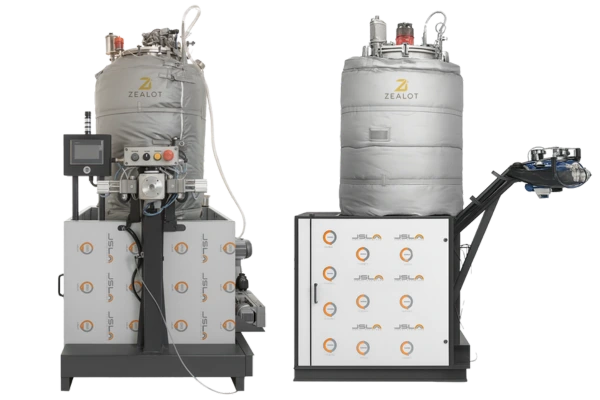
Producing high-quality MC Nylon requires more than just a mold; it requires precision-controlled Nylon Dispensing Machines. Variations in temperature or catalyst ratios during the anionic polymerization process can lead to internal voids or brittle sections.
Zealot Inc. provides state-of-the-art, fully automatic machinery designed specifically for the complexities of nylon casting. Our systems ensure:
- Consistent Flow: Eliminating air pockets in large-volume casts.
- Precision Temperature Control: Essential for the delicate chemistry of caprolactam polymerization.
- Turnkey Integration: We don't just sell machines; we design the entire production layout to optimize output for international standards.
2026 Industry Outlook: The Future of Cast Nylon
As we move toward Industry 4.0, the integration of smart sensors into casting machinery allows for "real-time polymerization monitoring." We expect to see a surge in "Smart MC Nylon" components, which are parts embedded with RFID or wear sensors during the casting process. Furthermore, the global drive for sustainability is pushing manufacturers to adopt MC Nylon as a recyclable alternative to complex metal alloys that are difficult to process.
Conclusion: A Strategic Partnership for Precision
Cast Nylon (MC Nylon) is more than just an industrial plastic; it is a high-performance engineering solution for the modern manufacturing era. By offering superior strength, self-lubrication, and thermal stability, it solves the most common pain points of heavy industry: wear, weight, and maintenance.
For organizations ready to modernize their production or transition to high-performance polymer manufacturing, Zealot Inc. offers the technical expertise and machinery required to succeed. From initial consultation to the commissioning of turnkey casting plants, we are your partner in engineering precision.