Introduction
In the high-stakes environment of industrial polymer manufacturing, the transition from raw chemical components to a high-performance elastomer is a delicate balance of chemistry and mechanical precision. Polyurethane dispensing machines serve as the heart of this process, ensuring that the critical ratio of polyols and isocyanates is maintained with surgical accuracy. For global manufacturers in the automotive, wind energy, and industrial roller sectors, the choice of a metering and mixing system is not merely a procurement decision; it is a strategic investment in product durability and operational efficiency.
At Zealot Inc., with over 30 years of engineering expertise, we have observed a shift toward high-degree automation and variable ratio technology. Modern systems must do more than just "pour" material; they must manage viscosity, regulate temperature, and eliminate human error in the casting process. This guide explores the architectural nuances of metering, mixing, and dispensing (MMD) systems and how they define the competitive edge for 2026 and beyond.
Key Takeaways
- Precision Accuracy: High-performance PU requires metering accuracy within ±0.5% to ensure chemical integrity and physical properties.
- Variable Ratio Flexibility: Advanced systems allow for real-time adjustments from MDI and TDI systems, catering to diverse product lines.
- Waste Reduction: Automated dispensing eliminates the "short-pot" waste typical of manual batching, significantly lowering the Total Cost of Ownership (TCO).
- Thermal Control: Integrated oil-heated or electrical heating systems are essential for maintaining the narrow processing windows of elastomers.
- Scalability: Modern MMD systems are modular, supporting everything from 50L R&D batches to 200L+ high-volume production.

What is a Polyurethane Metering, Mixing, and Dispensing System?
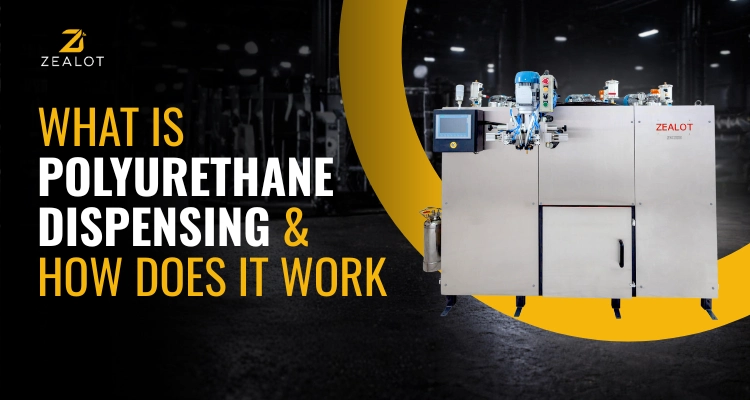
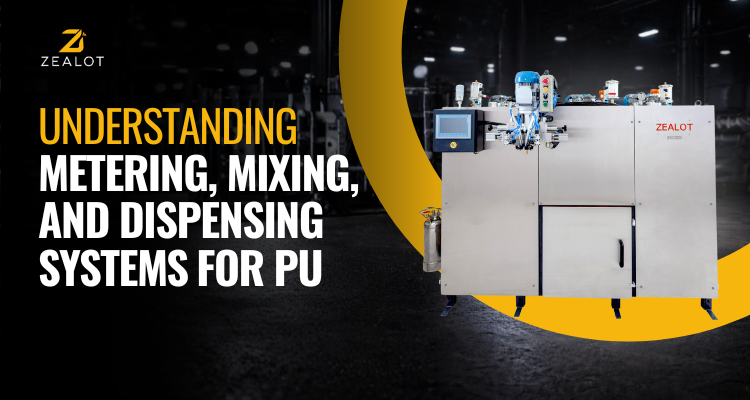
A polyurethane dispensing machine is an integrated industrial solution designed to precisely measure (meter), thoroughly blend (mix), and accurately deliver (dispense) two or more chemical components into a mold or onto a surface. The complexity of polyurethane lies in its reactive nature; the moment the resin and hardener meet, the "pot life" clock begins.
The Core Pillars of MMD Technology:
- Metering: Utilizing high-precision gear pumps to deliver exact volumes of material.
- Mixing: The transition from separate streams into a homogenous blend, typically via dynamic or static mixing heads.
- Dispensing: The controlled release of the mixture at specific flow rates to prevent air entrapment or "bubbles" in the final cast.
Industrial Applications: Where Precision Meets Performance
The versatility of high-precision MMD systems allows them to serve as the backbone for numerous critical industries. By ensuring material consistency, these machines enable the production of components that withstand extreme mechanical stress.
- Automotive Industry: Manufacturing of lightweight, durable seals, gaskets, interior components, and under-hood parts.
- Industrial Rollers & Wheels: Production of high-abrasion resistant polyurethane wheels (3-8 inch) and rollers for steel plants and material handling.
- Wind Energy: Specialized casting for wind blade components that require high-performance materials capable of withstanding environmental extremes.
- Mining & Heavy Machinery: Creation of wear-resistant gears, high-load bearings, and custom bushings using cast nylon and PU elastomers.
- Pharmaceutical & Medical: Precise dispensing for specialized packaging and medical instrument components through MIM and elastomer casting.
See How Polyurethane Dispensing Systems Work
Why Variable Ratio Technology is the New Industry Standard
In the past, many casting plants relied on fixed-ratio machines. However, as global markets demand more specialized products ranging from 60 Shore A rollers to 90 Shore A heavy-duty wheels, the need for variable ratio metering, mixing, and dispensing has become paramount.
Variable ratio systems allow operators to adjust the stoichiometric balance via an LCD touch panel. This flexibility is critical for:
- Switching between MDI and TDI: Accommodating different isocyanate bases without hardware overhauls.
- Hardness Customization: Fine-tuning the ratio to achieve specific mechanical properties (elongation, tensile strength, or abrasion resistance).
- Chemical Evolution: Adapting to new, eco-friendly green polyols that may have different viscosity profiles.
Comparison: Manual Batching vs. Automated Dispensing Systems
| Feature | Manual Batching (Hand Stations) | Automated PU Dispensing Machine | Strategic Impact |
|---|---|---|---|
| Consistency | High variability; human error-prone | Digital precision; repeatable results | Reduces reject rates by up to 95% |
| Material Waste | Significant "pot-life" waste | Minimal; "on-demand" mixing | Lowers raw material costs by 15–20% |
| Throughput | Limited by labor speed | Continuous or high-speed cycle | 3x to 5x increase in production capacity |
| Data Logging | None | Real-time monitoring & QC data | Essential for ISO & Aerospace compliance |
| Safety | High exposure to chemical fumes | Enclosed systems; vapor extraction | Enhances workplace safety & regulation compliance |
Strategic Considerations for High-Performance PU Casting
1. Thermal Management and Viscosity Control
Polyurethane components are highly temperature sensitive. A drop of even 5°C can radically alter viscosity, leading to poor mixing or pump cavitation. Zealot’s electric heated PU casting machines ensure that the material remains at a constant temperature from the tank through the hose to the mixing head, ensuring a seamless flow for high-viscous liquids.
2. The Role of the Mixing Head
The mixing head is where the "magic" happens. Modern high-precision systems use vortex or dynamic mixing to ensure that even at high flow rates, the chemical bond is uniform. This prevents "soft spots" in industrial rollers or wheels, which could lead to catastrophic failure in heavy-duty applications like steel plants or mining.
3. Turnkey Plant Integration
For CXOs and Operations Heads, the machine is only part of the equation. A turnkey polyurethane plant approach encompassing plant layout, specialized industrial hoses, and operator training ensures that the technology integrates into existing workflows without a steep learning curve.
Global Market Trends: 2025-2030 Outlook
The global polyurethane market is projected to grow significantly, driven by the shift toward lightweight materials in the automotive sector and the expansion of the renewable energy (wind blade) industry.
- Sustainability: We are seeing a move toward low-pressure foaming and casting to reduce energy consumption.
- Industry 4.0: Integration of IoT sensors in dispensing machines allows for predictive maintenance, alerting operators to pump wear before a failure occurs.
- Regional Dominance: While India remains a manufacturing powerhouse, export demands from Germany, the USA, and Australia are pushing manufacturers to adopt global safety benchmarks and IPUA-recognized standards.
Conclusion
Understanding metering, mixing, and dispensing systems is the first step toward industrial excellence. As the demand for high-precision, durable elastomers grows, the reliance on manual processes becomes a liability. By adopting automated polyurethane dispensing machines with variable ratio capabilities, manufacturers can ensure product consistency, significantly reduce waste, and scale their operations globally.
Zealot Inc. remains at the forefront of this evolution, bridging the gap between complex chemical engineering and practical, energy-efficient manufacturing solutions. Whether you are setting up a new facility or upgrading an existing line, precision is the only path to performance.